Signs Your Property Needs New External Rendering
External render does more than improve the appearance of your property - it protects your walls from the elements, helps prevent damp issues, and can even improve energy efficiency when combined with external wall insulation.
Like any exterior finish, render doesn't last forever. Over time, weather, moisture, movement and general wear can take their toll. Spotting the early warning signs can help you avoid more expensive repairs in the future.
Here are some of the most common indicators that it may be time to replace or repair your property's external render.
Visible Cracks in the Render
Not all cracks are serious, but they should never be ignored.
Hairline cracks can develop naturally over time, while larger or widening cracks may indicate movement within the building or a failing render system. Once cracks appear, water can penetrate behind the render, leading to further deterioration.
What to look for:
Hairline cracks across rendered surfacesDamp Patches Inside Your Home
External render acts as a protective barrier against rain and moisture.
If it begins to fail, water can seep into external walls, sometimes resulting in damp patches, peeling wallpaper or mould growth inside your property.
If you're noticing unexplained damp internally, damaged render could be one of the causes.
Render Is Crumbling or Falling Away
Render should remain firmly bonded to the wall.
If pieces are breaking away or sections sound hollow when tapped, the render may have lost its adhesion.
Ignoring loose render can eventually expose brickwork to the weather and increase repair costs.
Discoloration, Algae or Staining
Dark streaks, green algae and staining can make a property look tired.
While some staining can simply be cleaned, persistent algae growth may indicate excessive moisture retention or an ageing render system.
Modern silicone render is far more resistant to algae because of its water-repellent yet breathable properties.
Fading and Weather Damage
Years of exposure to sun, wind and rain gradually affect the appearance of external render.
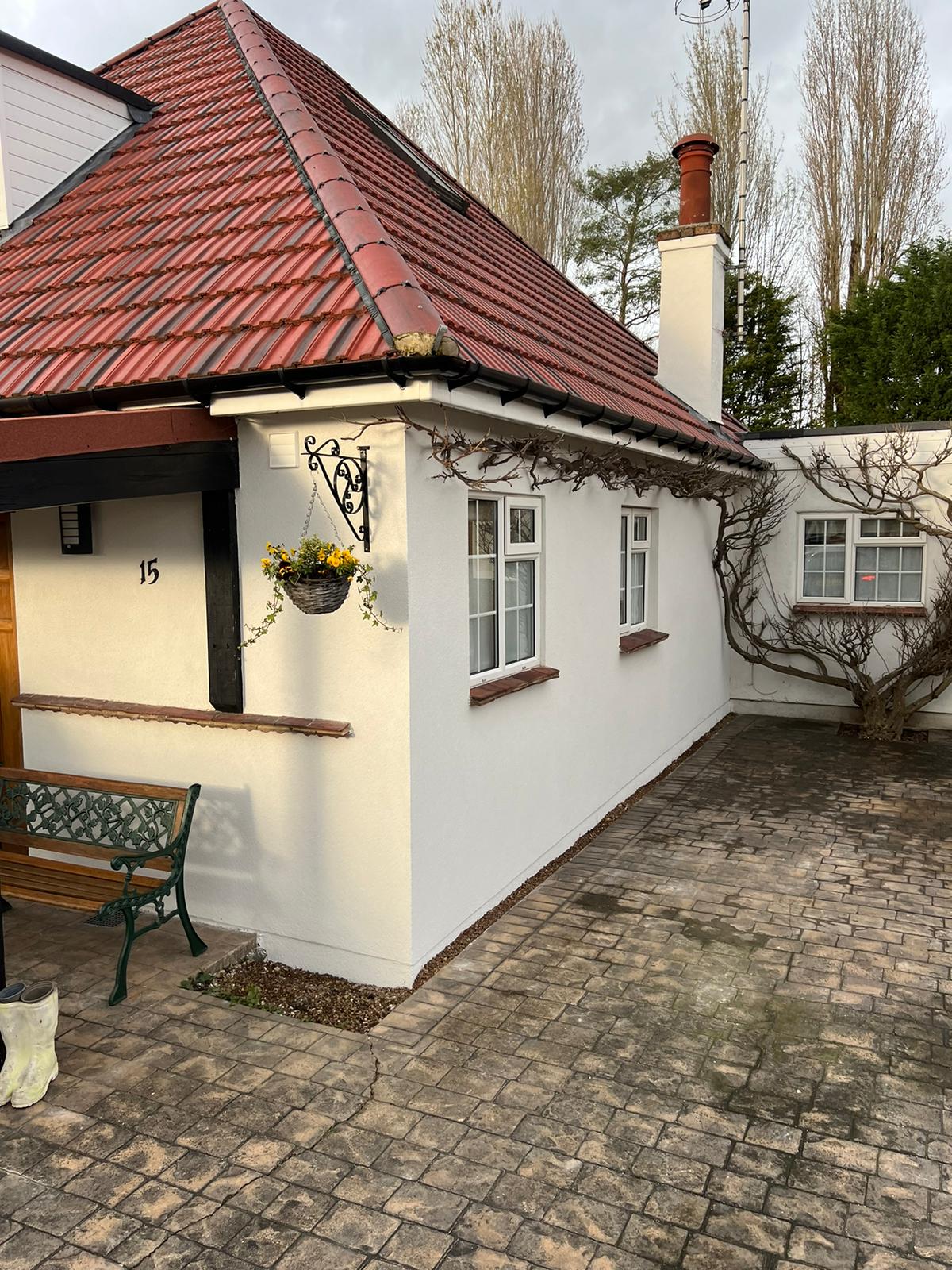
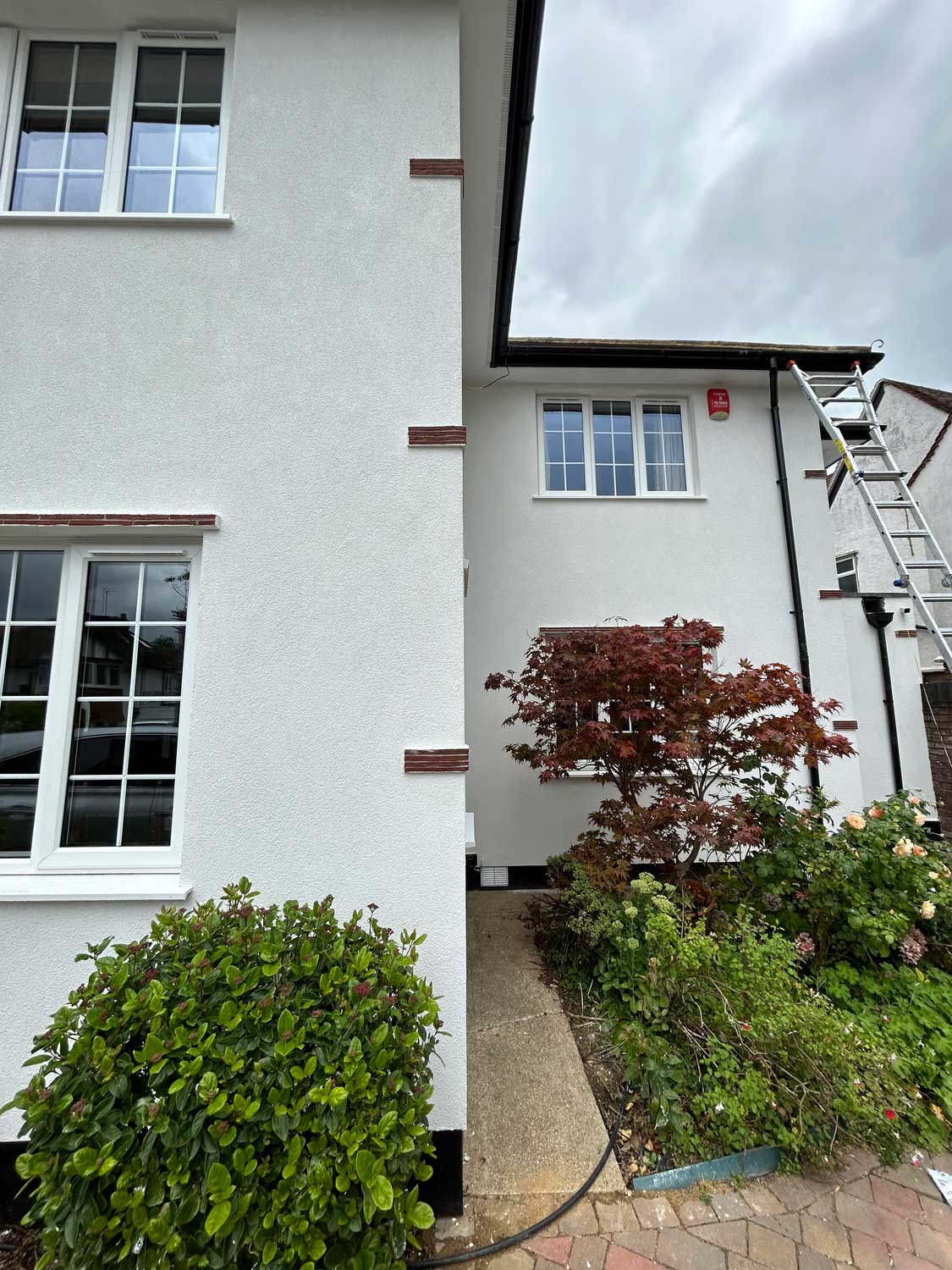
If your property looks dull, patchy or weathered, a new render system can completely transform its appearance while improving protection.
Should You Repair or Replace Your Render?
Small isolated issues can often be repaired.
However, if multiple areas are affected, the render is reaching the end of its lifespan, or moisture has started to penetrate behind the surface, replacing the render is often the most cost-effective long-term solution.
External render protects your home while enhancing its appearance. If you've noticed cracking, damp, loose render or persistent staining, it may be time to consider a replacement.